Global Shifts in Esports Betting Oversight Shape New Gambling Standards
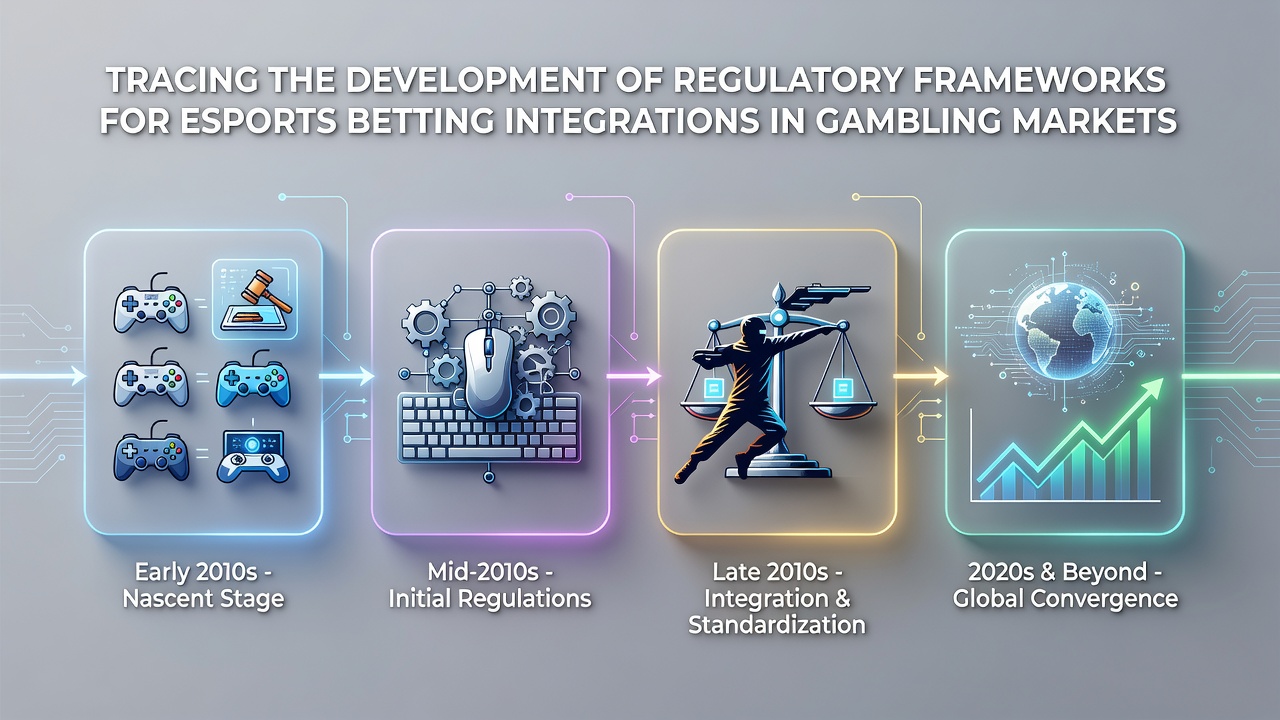
Esports betting has moved from niche online forums into mainstream gambling markets, and regulators across multiple continents have responded with layered frameworks that address licensing, consumer protections, and integrity measures. Those frameworks began taking shape in the mid-2010s when states and nations first recognized competitive video gaming as a legitimate betting category rather than an unregulated gray area.
Early Integration Efforts in North America
State-level authorities in the United States took the lead after the 2018 Supreme Court decision opened the door for expanded sports wagering. New Jersey's Division of Gaming Enforcement became one of the first bodies to issue explicit guidance on esports events, requiring operators to verify tournament structures and data feeds before accepting wagers. Similar steps followed in Pennsylvania and Michigan, where regulators tied esports betting approvals to existing sports-betting licenses rather than creating standalone categories.
Canadian provinces adopted parallel approaches around the same period. Ontario's Alcohol and Gaming Commission introduced rules that demanded clear segregation between esports betting pools and traditional sports markets, while British Columbia focused on age-verification protocols tailored to younger player demographics common in competitive gaming.
European Approaches Emphasize Cross-Border Consistency
Within the European Union, individual member states crafted their own responses while aligning with broader consumer-protection directives. Malta's gaming authority established a licensing tier specifically for esports operators, requiring audited tournament data and real-time monitoring for irregular betting patterns. Sweden and Denmark incorporated esports into existing online-gambling statutes, adding provisions that limited in-play betting on matches involving participants under eighteen. Observers note these measures emerged after several high-profile match-fixing cases highlighted vulnerabilities unique to esports ecosystems.
Asia-Pacific Developments Focus on Market Access
Australia's state regulators, led by New South Wales, introduced product-specific approvals that distinguish between fantasy esports contests and direct event wagering. These approvals mandate that operators partner only with esports organizers holding recognized integrity certifications. In contrast, several Asian markets pursued controlled pilots. South Korea maintained strict prohibitions on most forms of esports betting while allowing limited fantasy formats under lottery-style oversight, and Japan explored legislative pathways that would integrate esports into its integrated resort framework by the end of the decade.
Integrity and Data Standards Gain Prominence
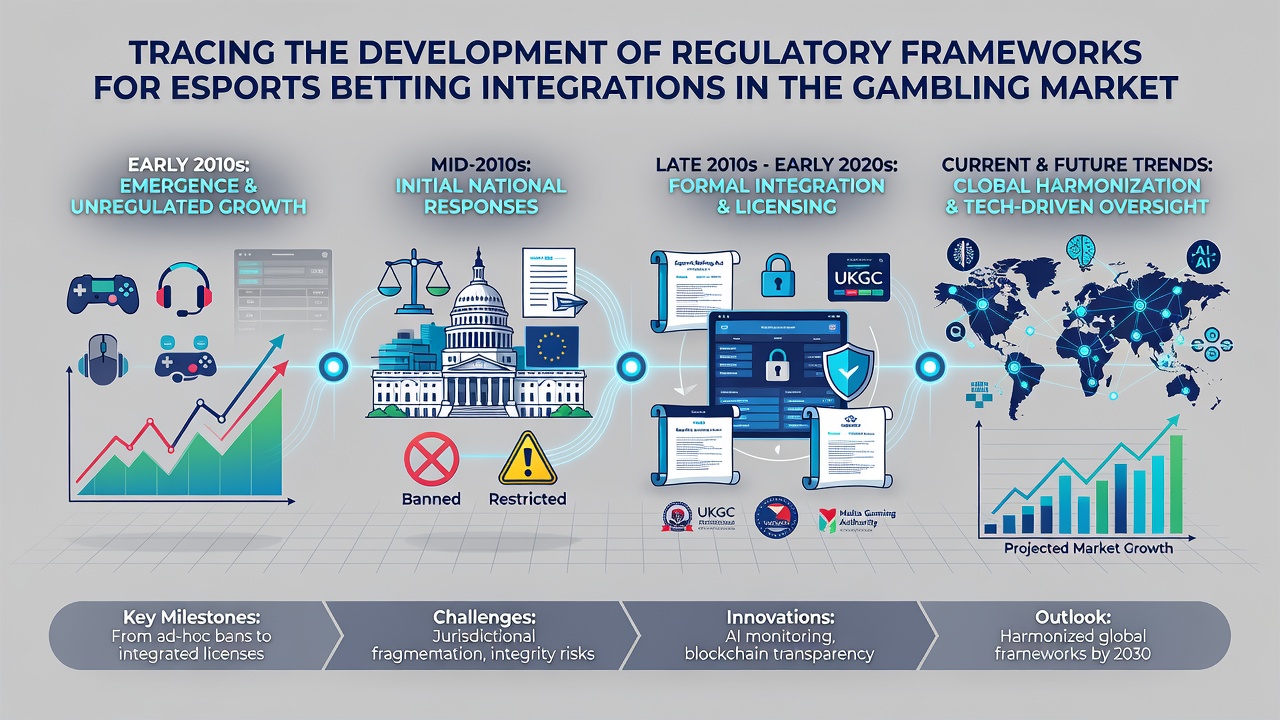
Match-fixing prevention became a central pillar of nearly every framework after 2020. Organizations such as the Esports Integrity Commission supplied standardized reporting tools that regulators began referencing in licensing conditions. Data from these systems show a measurable drop in suspicious betting volumes once operators were required to share real-time feeds with monitoring bodies. Academic studies from institutions including the University of Nevada have examined how these data-sharing requirements affect both operator costs and player trust levels.
Payment and responsible-gambling rules also evolved. Several jurisdictions now require deposit limits tied to verified player age and transaction history, while others mandate prominent display of time-spent warnings during live esports streams. Australia's national framework, for example, links these tools directly to its broader harm-minimization strategy for all online gambling products.
Looking Toward Mid-2026 Updates
July 2026 is shaping up as a checkpoint for several jurisdictions that embedded review clauses into their original esports betting legislation. Regulators in multiple US states and European countries plan to assess whether current licensing tiers adequately cover emerging formats such as battle-royale tournaments and mobile-only competitions. Early consultation documents indicate potential adjustments to minimum capital requirements and third-party audit frequencies, though final decisions remain pending.
Industry associations have supplied position papers outlining operational impacts, while research groups continue publishing comparative analyses of regulatory outcomes. These materials feed into ongoing policy discussions without prescribing specific solutions.
Conclusion
The development of regulatory frameworks for esports betting integrations reflects a pattern of incremental adaptation rather than wholesale reinvention. Jurisdictions have layered esports-specific provisions onto existing gambling statutes, introduced integrity safeguards drawn from both traditional sports and digital platform governance, and scheduled periodic reviews that allow for measured adjustments. Data from licensing bodies, academic reviews, and integrity monitors continue to inform these processes across North America, Europe, and the Asia-Pacific region, producing a mosaic of rules that evolve alongside the esports industry itself.