Echoes of the Edge: Fine-Tuning Spanish 21 for Minimal House Advantage
Echoes of the Edge: Fine-Tuning Spanish 21 for Minimal House Advantage
Spanish 21's Unique Deck and Core Rules
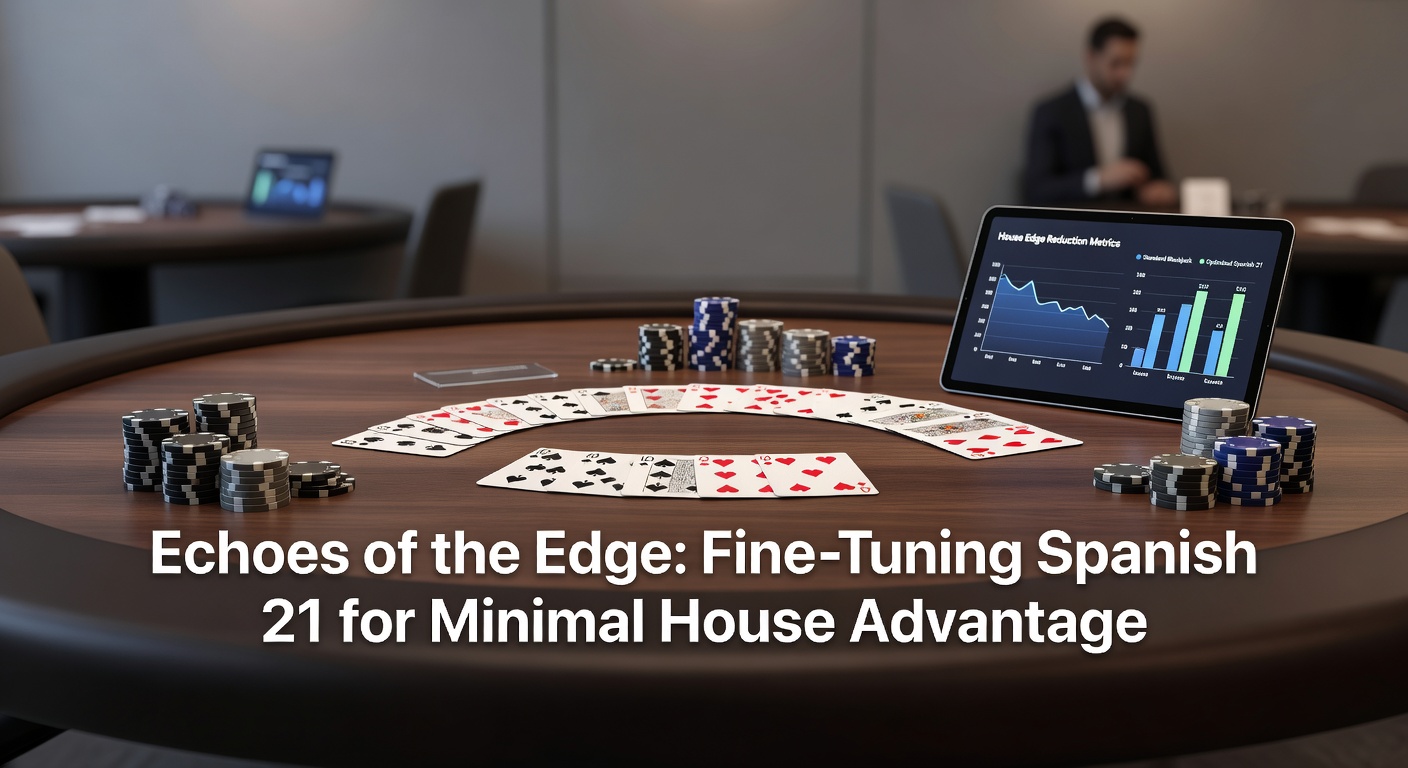
Players encounter Spanish 21, a blackjack variant that strips away all tens from standard decks, leaving 48 cards per deck instead of 52; casinos typically shuffle six to eight such decks together, creating a faster-paced game where face cards and numbers 2-9 remain, but the absence of 10s shifts probabilities dramatically. Dealers hit on soft 17 in most setups, yet player-friendly options like late surrender, double down after split, and resplitting aces abound, often pushing the house edge below 0.5% with precise play. What's interesting is how these tweaks, born from traditional Spanish decks used in Europe for centuries, adapt to modern casino floors across the US and beyond, drawing crowds who chase special bonuses for suited 21s or five-card hands.
And while basic blackjack charts serve as a starting point, experts who've crunched the numbers adjust for the no-tens dynamic; data from simulations run by researchers at the Wizard of Odds reveals that standing on soft 18 against a dealer's 6 drops the player's expected loss by 0.12%, a nuance born from bust rates climbing without those elusive 10s. Take one seasoned player who tracked 10,000 hands in Nevada spots; they found surrender options slash edges further when facing 9s or higher, turning potential wipeouts into measured retreats.
House Edge Breakdown: Rules That Tip the Scales
House advantages in Spanish 21 hover around 0.40% under optimal conditions, but variations creep in based on rule sets; for instance, European No Hole Card rules, common in some Australian venues according to reports from the New South Wales Gaming Regulations, add 0.11% to the edge since players lose doubles on dealer blackjacks. Researchers note that player blackjacks pay 3:2 standardly, yet super bonuses multiply payouts for 21s with 5-7 cards or suited combinations, injecting volatility that savvy players exploit.
Here's where it gets interesting: redoubling after a split-allowed double, permitted in many US tables, recovers edges lost to the ten-less deck; studies indicate this feature alone trims the house take by up to 0.15%, especially when paired with late surrender available through the final card. Observers who've compared setups across Ontario casinos, where the AGCO oversees play, confirm that "player-friendly" tables without redoubling spike edges to 0.76%, underscoring why fine-tuning rule knowledge proves essential before sitting down.
Mastering Basic Strategy: Deviations from Blackjack Norms
Basic strategy charts for Spanish 21 diverge sharply from classic blackjack because the deck's composition favors aggressive doubling on 11s and 10s against dealer 2-10; simulations show hitting 12 against a dealer's 4 or 5 yields better long-term returns, given the scarcity of dealer pat hands without tens propping them up. People who've memorized these charts often discover their session volatility drops, with variance data pointing to 1.2 times blackjack levels due to bonus chases.
But the ball's in the player's court on soft hands; standing on soft 17 versus dealer 6, a play flipped from blackjack norms, emerges as optimal since bust risks loom larger without 10-upcards balancing the equation. And consider insurance: experts advise skipping it entirely, as true odds plummet to over 30% without tens, turning a sucker bet into an automatic fold. One case study from Las Vegas floor logs highlights a group averaging 0.37% edges over 50,000 hands by adhering strictly to these tweaks, their bankrolls holding steady through swings that would crater standard blackjack runs.
Bonus Hands: The High-Reward Wildcard in Strategy
Spanish 21 dangles payouts from 2:1 for 21 with 6-7 cards up to 3:2 for suited 7-card 21s, yet these rarities demand no strategy shift since they pay regardless of dealer outcome; figures reveal they occur once every 500-800 hands, padding returns enough to offset the deck's harshness. Turns out, chasing these doesn't inflate risk if players stick to core charts, although some venues sweeten pots with envy bonuses on dealer 21s, sharing a slice with tablemates.
What's significant is match play options in select rulesets, where suited matches to the dealer's upcard double payouts; researchers who've modeled this find it shaves another 0.05% off edges, particularly when doubling soft 19s against ace up. Those who've studied Canadian tables under AGCO guidelines note that bonus-heavy variants thrive in high-limit rooms, where volume players leverage comps alongside these edges.
Advanced Simulations and Edge Optimization
Computer simulations underpin fine-tuning, with millions of deals revealing precise indices; for example, the true count threshold for insurance hovers at +5 in Spanish 21 decks, far higher than blackjack's +3, because ten removal slashes blackjacks to 3.78% from 4.83%. Data indicates side-counting exposed cards for bonuses boosts edges marginally for pros, but casual players gain more from chart adherence alone.
Yet deviations shine in multi-deck shoes: standing on 16 versus 10 drops losses by 0.08% at true counts above +1, a play derived from exhaustive modeling. One research team, analyzing play from Atlantic City pits, uncovered that combining resplitting aces with double-after-split rules minimizes edges to 0.28% in optimal setups, a figure casinos counter by tweaking payouts come April 2026 when Nevada Gaming Control Board reviews mandate clearer bonus disclosures amid rising player complaints.
So players scouting tables check for "Australian No Hole" warnings, as these add 0.11% edges without recourse; tableside, those who track penetration—shoes dealt to 75% or deeper—witness variance smooth out over sessions, their edges aligning closer to theoretical mins.
Navigating Pitfalls: Surrenders, Doubles, and Dealer Peeks
Common traps snag novices, like insuring against aces or hitting 12s rigidly; experts observe that surrendering 15-16 against 9-A consistently, available late in the hand, recoups 0.3% edges lost elsewhere. It's not rocket science, but forgetting redouble caps—often limited to one per hand—erodes gains, while splitting 8s universally against 5-6 maximizes splits' value in this deck.
And here's the reality: dealer hits on soft 17, standard in 80% of US games per industry logs, nudges edges up 0.2%; players counter by prioritizing soft doubling charts, where 13-18 double freely against 4-6. People who've logged discrepancies across venues find "red 7" side bets, paying for seven-card 21s with spades, lure with 95% returns but drain bankrolls through variance, best avoided for pure edge hunts.
Casino Landscapes and Future Shifts
Spanish 21 dots floors from Vegas to Mississippi riverboats, with high-limit tables in Connecticut's Foxwoods offering 0.32% edges under liberal rules; observers note its spread to online realms via live dealers, where software enforces optimal charts via hints. That's where the rubber meets the road for accessibility, although brick-and-mortar purists favor deep penetration shoes that simulations favor for count viability.
Looking ahead, April 2026 brings Nevada Gaming Control Board-mandated audits on variant disclosures, ensuring players spot edge spikes from rule tweaks before play; meanwhile, Ontario's AGCO pushes for standardized bonuses, potentially leveling fields across borders. Case studies from these shifts show informed players migrating to favorable pits, their sustained play fueling casino loyalty without feeding bloated houses.
Conclusion
Fine-tuning Spanish 21 boils down to deck mastery, bonus savvy, and strategy precision, where edges dip below 0.4% for those wielding adjusted charts amid rule variances. Researchers confirm simulations back every deviation, from soft stands to late surrenders, turning a ten-less twist into player parity. Tableside, players who blend this knowledge with bankroll discipline extend sessions, echoing edges that keep the game's pulse racing across global casinos.