Beyond the Spin: Understanding Random Number Generator Certifications in Modern Gaming Systems
Random number generators form the backbone of fairness in digital gaming environments, and their certifications have evolved into structured processes that regulators and operators rely on worldwide. These systems produce sequences of numbers that determine outcomes in slots, table games, and other electronic titles, while certifications verify that the underlying algorithms meet statistical standards for unpredictability and uniformity.
Core Components of RNG Technology in Gaming
Modern RNG implementations split between hardware-based true random number generators that draw from physical entropy sources such as thermal noise or quantum fluctuations, and software-based pseudorandom number generators that rely on complex mathematical algorithms seeded with initial values. Gaming platforms integrate both types depending on regulatory requirements and operational scale, with hardware options often reserved for high-stakes environments where additional layers of entropy strengthen output quality. Observers note that developers test these systems against suites of statistical batteries including dieharder, NIST SP 800-22, and TestU01 to confirm that sequences pass checks for serial correlation, frequency distribution, and runs testing before any certification body reviews the results.
Certification Pathways and Laboratory Standards
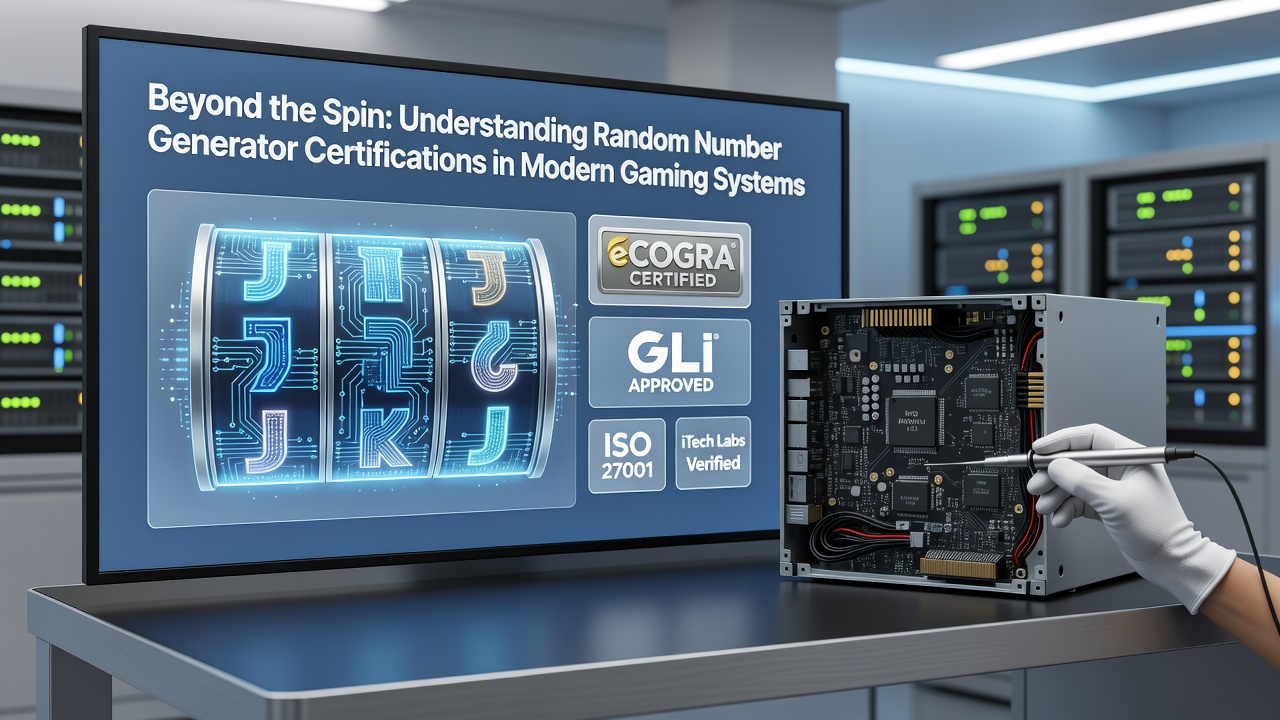
Independent laboratories conduct the bulk of RNG evaluations through documented procedures that examine source code, hardware specifications, and live output streams over extended periods. Gaming Laboratories International and iTech Labs operate as primary testing houses that issue compliance reports accepted across multiple jurisdictions, while eCOGRA provides additional seals focused on player protection metrics that include RNG integrity alongside payout verification. The process typically begins with algorithm submission followed by source code review, then moves into controlled testing environments where millions of game cycles are simulated to detect bias or predictability patterns. Data shows that successful certification requires passing thresholds such as p-value distributions remaining within acceptable ranges across repeated trials, and any deviation triggers iterative fixes before retesting occurs.
Regional Regulatory Adoption Patterns
North American frameworks led by bodies such as the Nevada Gaming Control Board and the New Jersey Division of Gaming Enforcement mandate RNG certification as a licensing prerequisite, requiring operators to submit fresh reports annually or after any software update that touches random outcome generation. European markets follow similar patterns through national authorities that reference common technical standards developed under the European Committee for Standardization, ensuring cross-border compatibility for game suppliers. Australian regulators in New South Wales and Victoria apply comparable requirements, often incorporating additional scrutiny for linked progressive systems where multiple RNG streams feed shared jackpot pools. Those who've studied regulatory filings observe that certification timelines have shortened in recent years due to automated testing tools, yet manual code audits remain mandatory for any novel algorithm introduction.
Technical Testing Methodologies in Practice
Laboratories apply layered evaluation protocols that combine static analysis of source code with dynamic runtime monitoring to verify that RNG outputs remain independent across concurrent game instances. One study revealed that entropy source depletion under heavy load represents a common failure point in software implementations, prompting certifiers to require continuous health checks that trigger reseeding or hardware fallback mechanisms. Researchers discovered that post-certification monitoring programs, which sample live game data from production servers, help detect drift caused by hardware aging or firmware changes that might otherwise compromise randomness quality over time. What's interesting is how these ongoing audits integrate with broader system integrity checks that also cover return-to-player calculations and game logic validation, creating a unified compliance framework rather than isolated RNG assessments.
Emerging Standards and 2026 Developments
Industry groups have coordinated updates to testing suites ahead of July 2026, incorporating new statistical batteries designed to evaluate RNG performance in cloud-distributed architectures and blockchain-integrated gaming environments. These revisions address emerging risks associated with virtual machine migrations and multi-tenant server deployments, where shared entropy pools require stricter isolation protocols to prevent cross-contamination between operators. According to reports from international standards organizations, the revised guidelines introduce mandatory quantum-resistant seeding methods for pseudorandom generators and expanded test durations that exceed previous benchmarks by factors of ten. Gaming associations have begun publishing compliance roadmaps that detail migration paths for existing certified systems, allowing operators sufficient lead time to update algorithms without service interruptions.
Integration with Broader Gaming Ecosystems
Certified RNG modules interface directly with game engines, payment systems, and audit logs through standardized APIs that preserve sequence traceability while protecting proprietary algorithm details. This integration enables real-time reporting to regulatory dashboards that track outcome distributions across thousands of concurrent sessions, flagging anomalies for immediate investigation. Case examples from North American deployments illustrate how operators maintain separate certification records for each game title, even when multiple titles share the same underlying RNG library, because jurisdiction-specific rules often demand title-by-title validation. Those who've examined audit trails note that cryptographic signing of certified RNG binaries prevents unauthorized modifications between laboratory approval and live deployment, adding another safeguard layer that complements the statistical testing regime.
Conclusion
Random number generator certifications continue to anchor trust in modern gaming systems through rigorous laboratory processes, regional regulatory oversight, and evolving technical standards scheduled for implementation around July 2026. These frameworks ensure that outcome generation remains statistically sound across diverse platforms and jurisdictions, supporting both operator compliance and player confidence in electronic game integrity. As distributed architectures and new entropy sources gain adoption, certification bodies adapt their methodologies while preserving core requirements for independence, uniformity, and ongoing verification.